


LocalPay: Making Stablecoins Work Where QR Codes Already Do
 Dec 10,2025
  By Toby Cutler
Overview
What if you could walk into any café in Hanoi, scan the same QR code everyone else uses, and pay with USDT instead of cash? That’s the friction point LocalPay is attacking. In Vietnam, QR code payments aren’t some futuristic vision, they’re how people actually buy coffee. The problem? Your stablecoins sit locked in your wallet while you fumble for local currency.
LocalPay is a non-custodial stablecoin wallet built on Solana that lets users pay at regular Vietnamese merchants by scanning their existing QR codes. No special merchant integration required. No bank account needed. Just USDT on Solana working at cafés, restaurants, and shops where QR payments already dominate.
The company is registered in Delaware and secured backing from Colosseum’s Accelerator Cohort 3 after placing third in the Solana Breakout Hackathon’s stablecoin category.
Here’s what matters: LocalPay doesn’t have custody of your assets. Your private keys stay yours. The app supports USDT on Solana with transfers happening in under five seconds from top-up to successful payment.
The target market is crystal clear—the platform focuses on the 169 million existing stablecoin holders globally, with specific emphasis on travelers and digital nomads operating across Southeast Asia. Right now, LocalPay is live exclusively in Vietnam, with expansion planned for Indonesia, Thailand, and the Philippines. The app passed Apple’s App Store review process and is available on both iOS and Google Play.
Innovations and Expansion
LocalPay’s founding team consists of crypto practitioners and digital nomads who lived the problem firsthand. They couldn’t spend their crypto at normal places in Southeast Asia, so they built infrastructure to fix it. The vision centers on making stablecoins genuinely useful for everyday transactions rather than just sitting in your wallet.
I’ve experienced this ease of friction personally over the past few months using LocalPay in Vietnam. Paying rent with USDT through the app eliminated the multiple conversion steps and fees that previously made each monthly payment a headache. I simply scan the landlords QR code, enter and confirm the transaction amount (in VND), and it settles in seconds—they receive dong, I spend USDT from my Phantom wallet.
The technical architecture runs entirely on Solana, leveraging the network’s speed and low transaction costs to enable instant peer-to-peer transfers via QR codes. Users top up their wallets by sending USDT directly on-chain, maintaining the non-custodial security model throughout. Real-time notifications let users review transaction details before approving payments, adding a verification layer without sacrificing speed.
LocalPay’s expansion strategy focuses on markets where QR code payment infrastructure already exists at scale. Vietnam serves as the initial proving ground because ubiquitous QR adoption creates ready-made distribution. The company plans sequential rollouts to Indonesia, Thailand, and the Philippines—all markets where digital payment habits are established but crypto integration remains nascent.
The platform recently reported 4x growth over a 30-day period, suggesting early traction with its target demographic. To accelerate awareness, LocalPay launched a content creator program offering $50-$1,000 bonuses for videos that hit 100,000 views, plus 50% upfront payment and creative freedom to authentically demonstrate real-world usage. However, there is definitely room for improvement when it comes to their current marketing campaigns.
Ecosystem and Utility
The wallet’s core functionality centers on eliminating barriers between stablecoin ownership and everyday commerce. Users maintain sovereign control over assets stored directly on the Solana blockchain while the app provides an interface simple enough for non-technical users. Send and receive functions work through QR code scanning, mirroring the payment flows Vietnamese consumers already understand.
Grocery shopping at local markets now means scanning the same QR codes as everyone else. The app handles exchange rates transparently, transactions complete in under five seconds, and the UX feels native to Vietnam’s existing payment culture rather than forcing new behaviors. “The breakthrough moment was realizing I didn’t need to educate merchants about crypto,” I explain to a friend. “I scan their existing QR code, I approve the transaction in LocalPay, and it’s done. The merchant gets dong and nobody needs to understand blockchain for it to work. That’s the difference between theoretical crypto adoption and actually using this stuff to live.”
LocalPay preloads creator program participants’ wallets with USDT so they can film actual purchases at coffee shops, restaurants, and grocery stores without risking personal funds. This approach generates authentic proof-of-concept content showing the wallet functioning in real merchant environments rather than staged demonstrations.
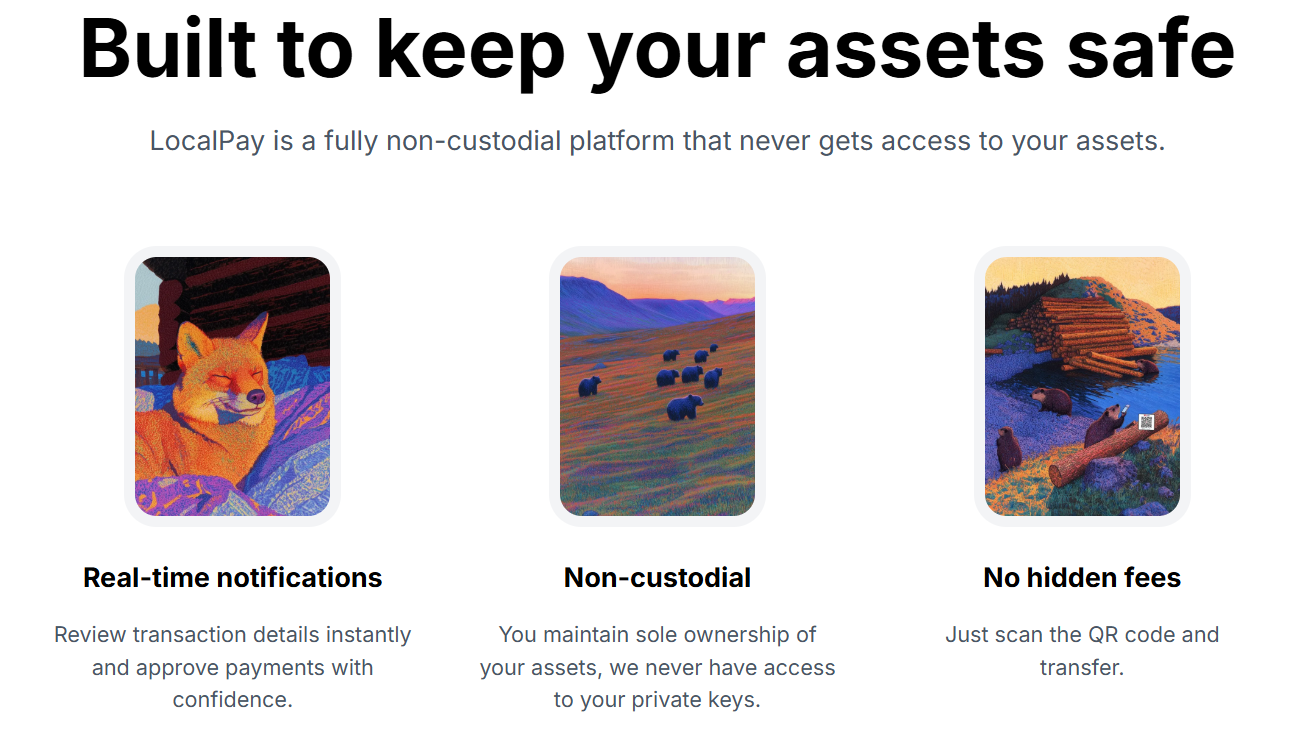
The platform’s stated value proposition revolves around three pillars: eliminating hidden fees, maintaining non-custodial security, and enabling fast transactions. By operating on Solana rather than Ethereum or other Layer 1s, LocalPay avoids gas fee friction that historically made small everyday purchases economically unviable with crypto.
For travelers and digital nomads specifically, LocalPay addresses a persistent pain point. These users often hold stablecoins to hedge against their home currency or facilitate international transfers, but converting crypto to local cash involves multiple steps, fees, and time delays. LocalPay collapses that workflow into a single QR scan.
Bottom Line
LocalPay represents a successful attempt to bridge crypto infrastructure with existing payment behaviors rather than demanding merchants adopt entirely new systems.
The Colosseum backing provides credibility—only 10 teams out of 1,412 Breakout Hackathon participants earned accelerator spots, representing a 0.68% acceptance rate.
What makes this potentially sustainable is the focus on practical utility over speculation. LocalPay isn’t promising yield farming or token launches. It’s solving a concrete problem for a specific user base that genuinely exists. The 4x growth metric suggests product-market fit might be emerging, and I personally see that multiplier soon reaching double and even triple digits.
Expansion to other Southeast Asian markets will require navigating different regulatory environments and payment infrastructures. And competition from both crypto payment platforms and entrenched e-wallets like MoMo creates real pressure.
Still, LocalPay has picked a defensible lane. They’re not trying to reinvent payments—they’re making stablecoins work within the payment flows that already dominate Southeast Asia. For the estimated millions of digital nomads and travelers moving through the region with USDT in their wallets, that’s a genuine unlock. If they execute cleanly on marketing and geographic expansion, the market opportunity is substantial.


 Aug 03, 2025

